

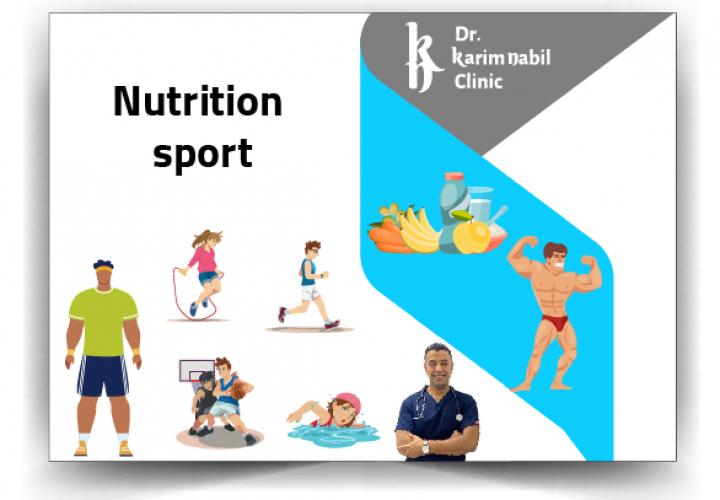


Nutrition Sport
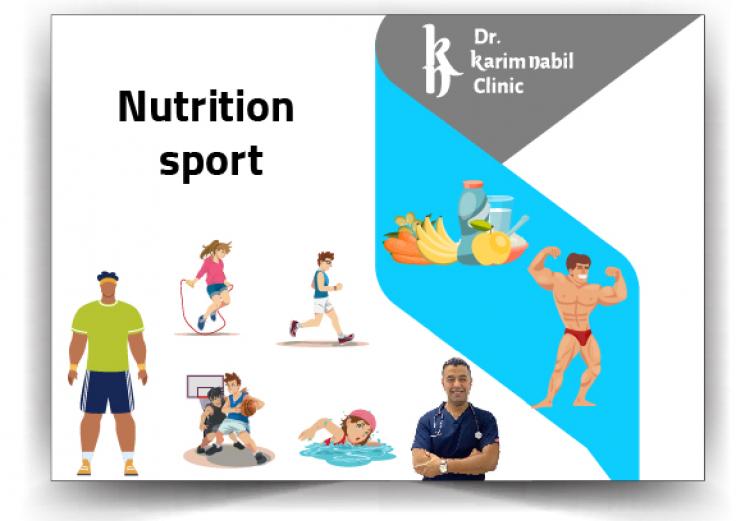
Athletes' diet is necessary for every athlete.
Each athlete has different nutritional needs of:
- Calories
- Vitamins
- Minerals
- Fluids
To exercise for a long time with high strength, every athlete needs to:
- Delay fatigue.
- Practical and healthy sports nutrition.
- Increase concentration.
- Enhance the body's immunity.
- Reduce the risk of infection.
Our goal is to provide athletes with the most efficient healthy nutrition to help them to increase their performance, maintain their athletic level in stadiums, and increase their ability to compete.
The scientist (Hara) set conditions for feeding athletes at the following points:
- Good nutrition must be integrated in quantity and quality (amount and type).
- proper nutrition should be diverse in terms of source and type.
- proper nutrition should be easy to digest and not to be overstated in its quantity.
- proper nutrition should be appropriate to the effort being made, according to the type of different activities, as well as with the training seasons as well as the climate in terms of quantity and type.
- proper nutrition must contain fats, carbohydrates, proteins, salts, vitamins and water.
- Therefore, we must confirm that nutrition is an important base for preparing any athlete in order to reach the optimal levels.
- Sports nutrition is based on purely scientific guidelines and studies that have been experimented over the years.
The most important of these guidelines is the dependence on quality, not on quantity and on the type of sporting activity. Each sport has different nutrition than the other, as the type of food for races (long distances, which mainly depend on carbohydrates) is different from feeding for races (short distances, which depend mainly on protein), meaning that the nutrition for races Endurance is different from feeding to speed racing.
- And we emphasize that nutrition depends on quality not on the quantity, it is the contribution of carbohydrates, fats and protein to different levels of energy production, and for this the athlete must eat (55% to 60%) of carbohydrates and (25% to 30%) of fat and (10% to 15%) of protein in its diet.
- The nutritional systems for athletes must be through a doctor who is specialized in this, and also it is the responsibility of the player.
Taking the advice of the specialist doctor and implementing it prevents malfunctions, severe

 English (United Kingdom)